How Playing Board Games Together Builds Math Skills
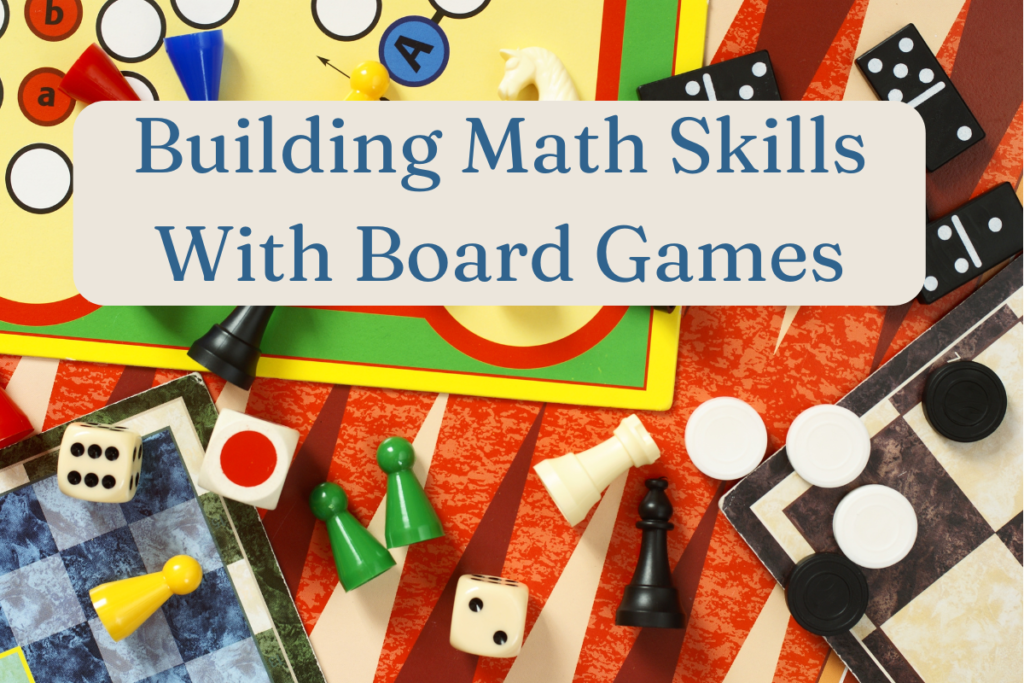
Board games aren’t just a fun way to pass the time—they can be a powerful tool for learning. One of the best recommendations I make to families of struggling math students is to start playing board games together.
Many classic and modern games encourage players to use number sense, strategy, and logical thinking without even realizing they’re doing math. Whether rolling dice, managing money, or calculating risks, these activities reinforce important mathematical concepts in an engaging way.
Plus, board games help develop other essential life skills, such as communication and problem-solving. In this article, I have given you three ways board games can improve math skills, along with three additional benefits beyond numbers.
Strengthening Basic Arithmetic
Games that involve rolling dice, counting spaces, or handling money give players frequent opportunities to practice addition, subtraction, multiplication, and division.
For example, Monopoly requires players to add and subtract when buying properties, paying rent, or making trades. Sorry! and Chutes and Ladders help younger children strengthen counting skills as they move along the board.
Since math is embedded into gameplay, kids stay engaged while improving their number sense.
Developing Strategic Thinking with Probability
Some board games require players to think ahead and assess the likelihood of different outcomes, which helps build an understanding of probability.
In Yahtzee, for instance, players must decide which dice to keep and which to reroll based on their chances of achieving specific combinations.
Settlers of Catan encourages players to evaluate the probability of rolling certain numbers and use that knowledge to make resource decisions.
These games naturally introduce concepts like chance, ratios, and expected value in a hands-on way.
Practicing Financial and Resource Management
Many games incorporate money management or resource allocation, giving players real-world math practice.
The Game of Life involves budgeting and financial planning as players navigate career choices, loans, and expenses.
Ticket to Ride teaches players how to efficiently use limited resources (train cards) to complete routes while considering costs and strategy. By playing these games, children and adults develop an intuitive understanding of financial math.
Building Social and Communication Skills
Beyond math, board games encourage teamwork, turn-taking, and effective communication.
Games like Codenames or Dixit require players to explain their reasoning, listen actively, and collaborate with teammates. These skills are essential in both academic and professional settings.
Enhancing Critical Thinking and Problem-Solving
Board games often require players to make decisions, analyze situations, and adapt strategies based on changing circumstances.
Games like Chess and Clue challenge players to think critically, form logical conclusions, and anticipate opponents’ moves.
Even simpler games like Connect Four encourage pattern recognition and planning ahead. This kind of strategic thinking translates well into problem-solving in school and everyday life.
Learning to Handle Loss
One of the toughest, but most valuable, lessons children can learn from board games is how to lose.
No one likes to lose, but it’s a natural part of any game—and life. Board games provide a structured, low-stakes way to experience disappointment and build resilience.
When kids learn to lose gracefully, they develop emotional control, patience, and the ability to reflect on what they can do better next time.
These skills will help them in school, sports, and even in their future careers, where setbacks and failures are inevitable. Understanding that losing is part of learning makes it easier to keep trying and improving.
Your Turn
Whether it’s practicing arithmetic, exploring probability, or learning strategy, these games (and many more!) offer valuable learning opportunities in a low-pressure environment.
So, the next time you gather around the table for game night, know that you’re not just having fun—you’re also building essential skills for the future. Why not implement a weekly family game night and start this week?